
A T-Shirt in 40 Seconds: What Faster DTG and DTF Printers Mean for You
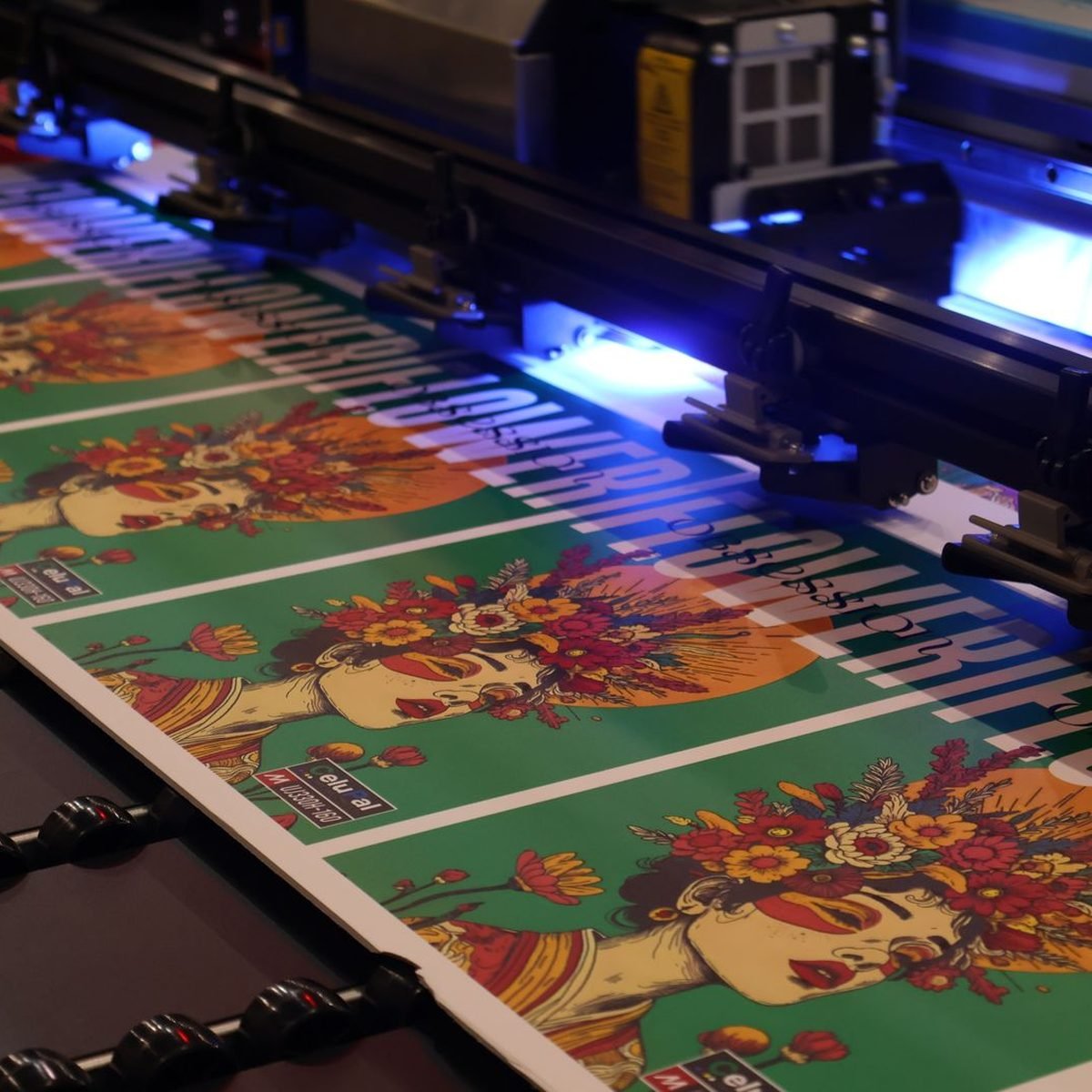
Printing technology for T-shirts keeps getting faster. Maeil Business News Korea reports that Brother has launched a new apparel printer that can print a T-shirt in roughly 40 seconds. Machines like this use direct-to-garment (DTG) technology, where ink is sprayed straight onto the fabric, much like an office printer prints on paper. Combined with the rapid growth of direct-to-film (DTF) printing, it shows how quickly custom apparel production is changing.
At Teesgraphy, we use modern printing methods in our own unit in Hyderabad. Here is what faster printers mean for you, and what still matters beyond speed.
DTG and DTF in Simple Words
- DTG (direct-to-garment): the design is printed directly onto the T-shirt. Great for full-colour artwork, photos and small quantities, with a soft feel on cotton.
- DTF (direct-to-film): the design is printed on a special film, coated with adhesive powder, and heat-pressed onto the garment. Works on cotton, polyester and blends, with bright colours on dark fabrics.
Both methods need no screens or plates, which is why they are ideal for short runs and designs with many colours.
What Faster Printers Mean for Buyers
- Small batches become practical: 10 or 20 custom tees for a birthday, team or pop-up event are easier to produce at a fair price.
- More design freedom: gradients, photos and detailed artwork can be printed without extra screen costs.
- Quicker turnaround: faster machines reduce waiting time, especially during busy seasons.
- Personalisation: different names or numbers on each shirt are simpler to handle.
Speed Is Good, But Proofing Still Comes First
A machine that prints in 40 seconds will print a mistake in 40 seconds too. That is why at Teesgraphy every design goes through a proof check before it reaches the printer. We check spelling, image resolution, colours and print placement, and you approve a digital mockup before production starts. Fast printing only helps you if what comes out is right.
Choosing the Right Print Method
Faster DTG does not make other methods obsolete. The best choice depends on your order:
- Screen printing is still the most cost-effective for large runs of simple designs.
- DTF is excellent for bright designs on dark or polyester garments.
- DTG suits detailed, full-colour designs in smaller quantities.
- Embroidery gives a premium look for polos, caps and hoodies.
Our team will recommend the method that gives you the best result for your budget, whether you need 10 round neck T-shirts or 1,000.
Tips for Print-Ready Artwork
- Send high-resolution files (300 DPI at print size) or vector files.
- Use a transparent background (PNG) for DTG and DTF designs.
- Tell us the garment colour so we can plan a white underbase if needed.
Frequently Asked Questions
Is DTG or DTF printing durable?
Yes. With the right inks, curing and washing care (inside out, cold wash), both last for many washes.
What is the minimum quantity for digital printing?
Digital printing works well even for single pieces and small batches. Ask us for a quote for your quantity.
Can you print photos on T-shirts?
Yes. DTG and DTF are ideal for photo prints, as long as the image is sharp and high resolution.
Source: Read the original report on Brother's new apparel printer, Maeil Business News Korea (MK), 14 October 2026. This article summarises the original report and adds Teesgraphy's view for custom T-shirt and merchandise buyers.
Print Your Custom Tees with Teesgraphy
Ready to start? Message us on WhatsApp or call 8885547134. Send us your design and quantity, and our Hyderabad team will suggest the best print method, share a proof and give you a fast, fair quote.
Related posts
 The Ultimate Guide to the 7 Most Common Printing Methods
Why We Proof-Check Every Design Before Printing
300 Shirts an Hour: What Faster Heat Presses Mean for Bulk T-Shirt Orders
The Ultimate Guide to the 7 Most Common Printing Methods
Why We Proof-Check Every Design Before Printing
300 Shirts an Hour: What Faster Heat Presses Mean for Bulk T-Shirt Orders
Leave a comment